The term high odds is one of the most searched terms in sports betting — and it's right for a reason. They promise big returns from small stakes, which makes them instantly attractive to any bettor. During major tournaments like the FIFA World Cup, the search for high-odds selections spikes dramatically. But here is what many bettors miss: high odds are not a signal of opportunity. They are a signal of low probability. The higher the odds, the less likely the bookmaker believes that outcome will happen. That is the key misunderstanding this article will address.
What Do High Odds Mean in Sports Betting?
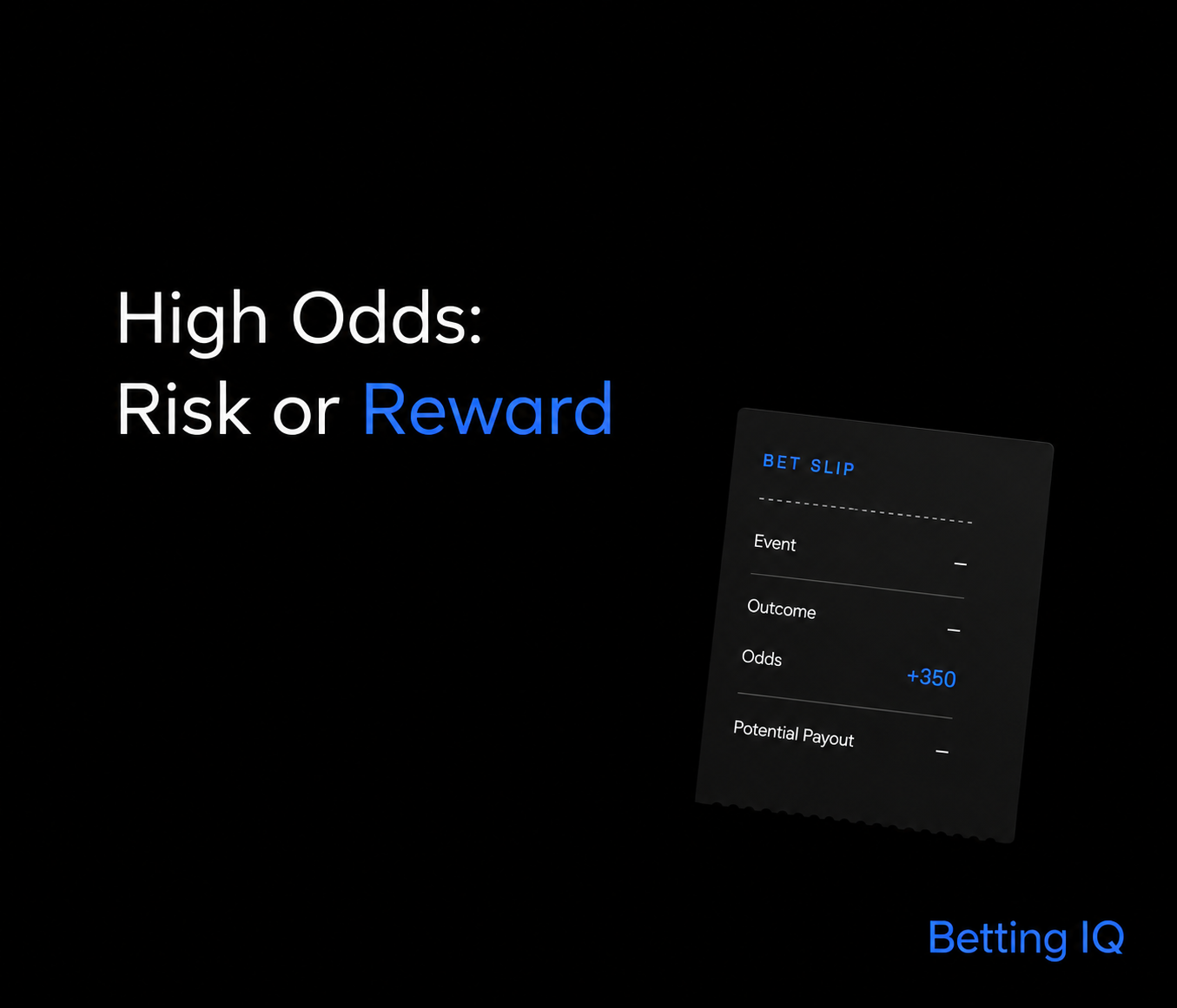
In sports betting, odds represent probability. The higher the odds (10.00 or greater in decimal) a bookmaker gives to a selection, the more likely they are to say the event is improbable. The odds of winning are slim, which is why the payout is high.
You will see high odds on betting apps like Sportybet, 1xBet, and BetWay attached to outcomes such as a heavy underdog winning, a correct score prediction, or an obscure player scoring first. On screen, they look exciting. The big payout is offset by your low wager, giving you the sense of easy money. However, their margin — often referred to as their overround or vig — has already been factored into these odds, and the house always has a cut-throat advantage.
Football Example: Favourite vs Underdog Odds
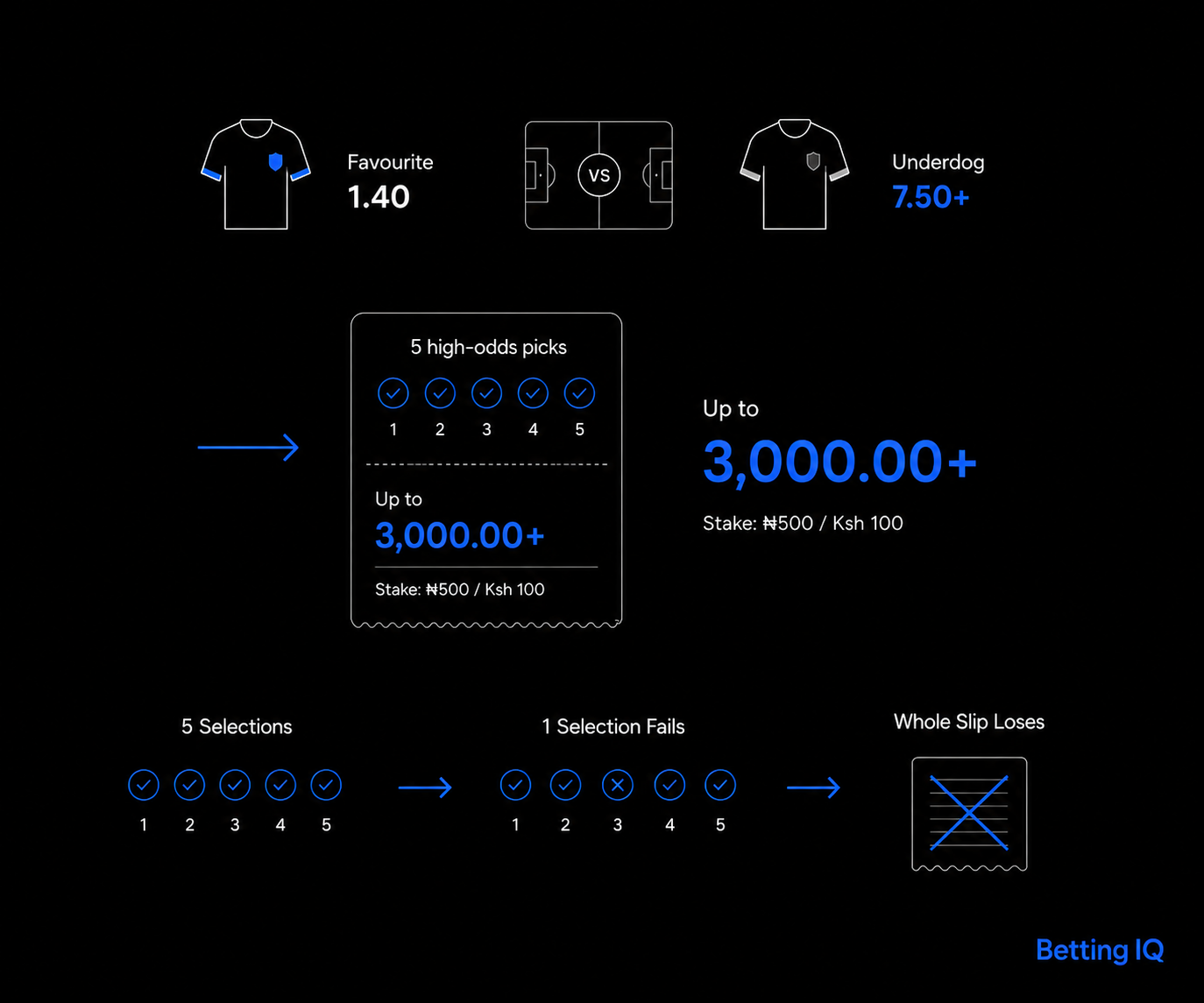
Think of a match between the top-ranked team and a lower-ranked team in the group stage of the Africa Cup of Nations. The favourite could be priced at 1.40 to win. The underdog could be listed at 7.50 or higher.
Now, consider a bettor who booked the underdog with four other high-odds picks. The odds can be up to 3,000.00 or higher on paper. An initial stake of ₦500 or Ksh 100 seems like a life-changing return.
The truth is, you will need to win on each selection. Not every one of those five outcomes is a "must," and in the case of high odds, the other outcome is much more likely to occur — and if that happens, the whole slip is considered a loser. Excitement and risk are compounded in an accumulator. This is NOT a problem with the system. That's the design.
High Odds Do Not Always Mean Value
The common misconception is that high odds equal high value — if the bettor says that the bookmaker has missed something and therefore underestimated the chances of that event. In rare instances, this may be the case, but it is not instinct.
Typically, bettors pursue high odds simply because they believe they could win lots of money, not as a result of in-depth study. This is called outcome bias: evaluating a decision based on desired rather than probable results.
The best odds don't necessarily equal the best value. They are a risk level you won't want to take. A 15.00 selection is not a gift. It is the bookmaker's way of indicating that this is not expected to happen. Taking any long shot is one of the quickest methods to lose a betting bankroll.
Financial and Emotional Risks Behind High Odds Bets
The financial risk of playing high odds bets is simple – the strike rate isn't high. One big win doesn't make up for the earlier losses.
Less apparent is the emotional risk. A high odds winner can make a bettor go from being a recreational player to being a compulsive player. When it almost happens – four-of-five accumulator legs – the urge to raise the stakes on the next slip is strong. This is a well-documented trend in responsible gambling research, as seen in organisations such as GamCare and BeGambleAware.
Common risk triggers include betting more than you originally intended, wagering salary money on a "sure" long shot or following a tipster's high odds booking code without knowing the selection. The first step to protecting them is to recognise them.
Why High Odds Appeal to African Bettors
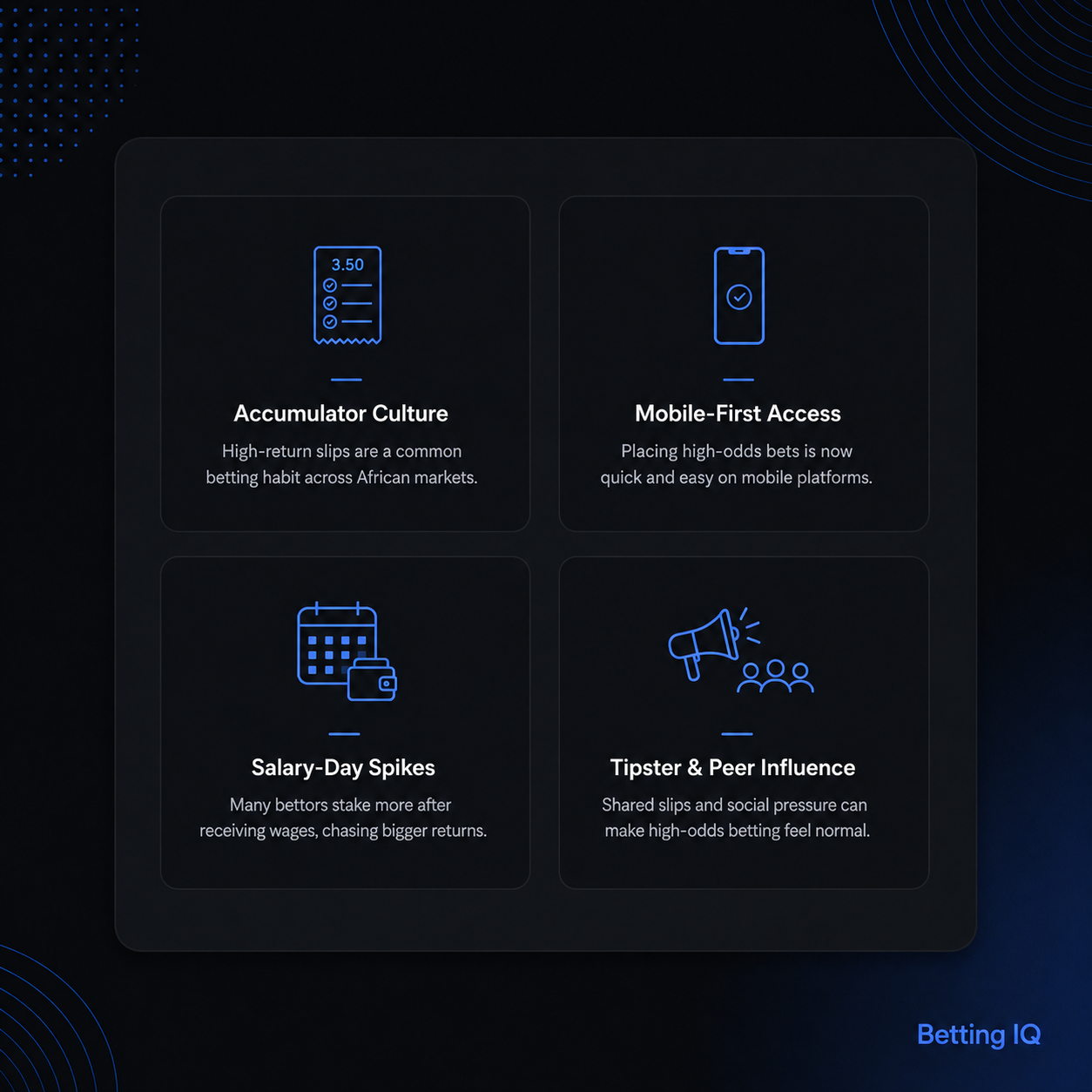
In markets such as Nigeria, Kenya, Ghana and South Africa, the culture of accumulators is pervasive in common betting habits. The odds of winning are often high on these bookings, which often have multiples of the numbers that offer thousands of returns for very little wager.
Playing them now is as simple as clicking a few buttons, thanks to mobile-first betting platforms. Another trend that has been noted is salary days, when bettors wager more on high odds slips following the receipt of wages. There's an appeal there, and it's one that makes sense, but the statistics don't always line up with the emotional expectation. Tipster culture and peer influence can compound this, making the high odds habit seem like the norm.
Before You Chase High Odds, Ask This Question
High odds do not imply a value signal. When making a high odds bet, inside an accumulator or any other bet, ask yourself one honest question: Do I believe it will happen or do the payout numbers look exciting? Any tipster or booking code will not make your betting decisions better than this one question, when you answer it honestly.