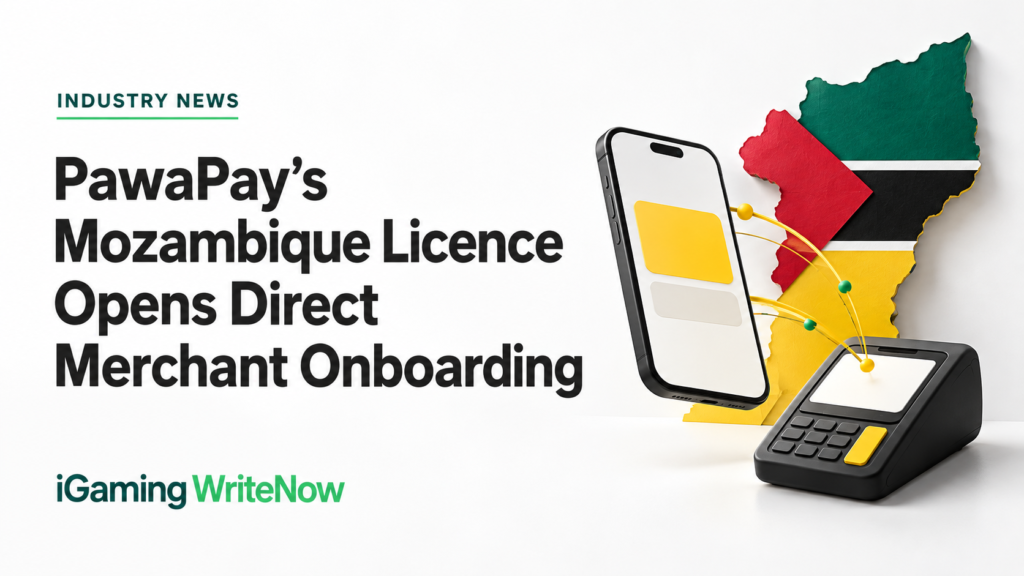
PawaPay has announced that its local subsidiary, Quidexplus Mozambique, has received a payment-service-provider licence from the Bank of Mozambique.
According to the company’s 8 October announcement, the authorisation enables direct merchant onboarding and the provision of regulated payment services in the country.
This gives businesses considering Mozambique a locally licensed payment partner to assess. For betting operators and market-entry teams, the opportunity depends on merchant eligibility, supported wallets and how the service handles transactions from collection through to settlement.
Direct Merchant Onboarding Creates a New Assessment Point
The licence announcement gives PawaPay a clearer basis for onboarding merchants directly in Mozambique. However, it does not confirm that every betting business can use the service.
A payment provider’s authorisation and a gambling operator’s permission to conduct business are separate matters. Operators must establish their own regulatory position and confirm that PawaPay accepts their business category.
So, the first onboarding questions concern eligibility, required documentation and contractual restrictions. These checks should come before teams commit to an integration or include the payment service in a market launch plan.
The announcement does not disclose the licence’s full conditions or a guaranteed approval timetable for merchants.
Supported Wallets Depend on the Payment Function
PawaPay’s announcement names M-Pesa, E-Mola and mKesh as part of Mozambique’s mobile money market. But the wallets available in a country and the routes supported by a payment supplier are different things.
The company’s provider documentation lists Vodacom and Movitel for Mozambique, with transactions denominated in meticais. Its Movitel entry states that deposits are unsupported, while mKesh does not appear in the section.
This makes transaction-level verification necessary. A business might be able to send money through a particular wallet without being able to collect payments through it.
PawaPay directs merchants to its active-configuration endpoint to check the providers available on their account. Operators should use that information to confirm the collection and payout routes their intended customers can access.
Settlement and Transaction Recovery Need Clear Ownership
For a sportsbook, a payment integration must support more than the initial deposit. Customers also need understandable withdrawal status, clear explanations when transactions remain pending and a support route when something goes wrong.
Hence, an eligible merchant should establish settlement timing, fees, balance requirements and responsibility for reconciliation before going live.
Support teams also need a practical escalation process. They should know which transaction details to collect, who investigates an unresolved payment and how the customer receives an update. These are implementation requirements to assess with the provider.
iGW Market Relevance: Assess the Complete Payment Journey
Our AMR Platforms and Partnerships question is whether the configured service fits the payment journey of the Mozambican audience being served. Operators should assess wallet access, collections, payouts, settlement and recovery together.
The licence creates a basis for engagement; merchant eligibility and the available payment routes determine what a business can actually implement.