
You’ve agreed on the campaign concept. The team is on board, the supplier has shared the product information, and work is ready to start. Then someone asks a simple question: who signs off on the player-facing copy?
Marketing assumes compliance will review it. Compliance is still waiting for confirmed product details. Meanwhile, your content partner has a draft but doesn’t know which version of the offer is final.
Before a launch or ongoing content project begins, agree who creates each asset, supplies the information, approves the final version, and publishes it. Be clear about any external dependencies and the evidence needed to review the work.
A content partner can take responsibility for an agreed scope of work without owning product decisions, compliance approvals, or supplier relationships.
Your Brief Should Name the Decision Before Dividing the Work
Start by defining what success actually looks like for the engagement. A launch project might need clear, approved copy for a new product in a specific market. An ongoing content partnership might need a steady stream of football articles and channel content each month.
The information required for those projects will be different. For a product launch, you may need confirmed product details, availability, and guidance on what can and cannot be claimed. For recurring football content, you’ll need an editorial calendar, trusted fixture sources, and a process for updating content when information changes.
For the inputs to gather first, prepare your review brief before assigning the work.
Define the market, audience, channels, and expected deliverables alongside the objective. A request for “local content support” is open to interpretation. A request for “four approved football explainers for our Nigeria blog, plus separate LinkedIn captions” is much easier to scope, review, and deliver.
Your Responsibility Map Should Separate Production From Approval
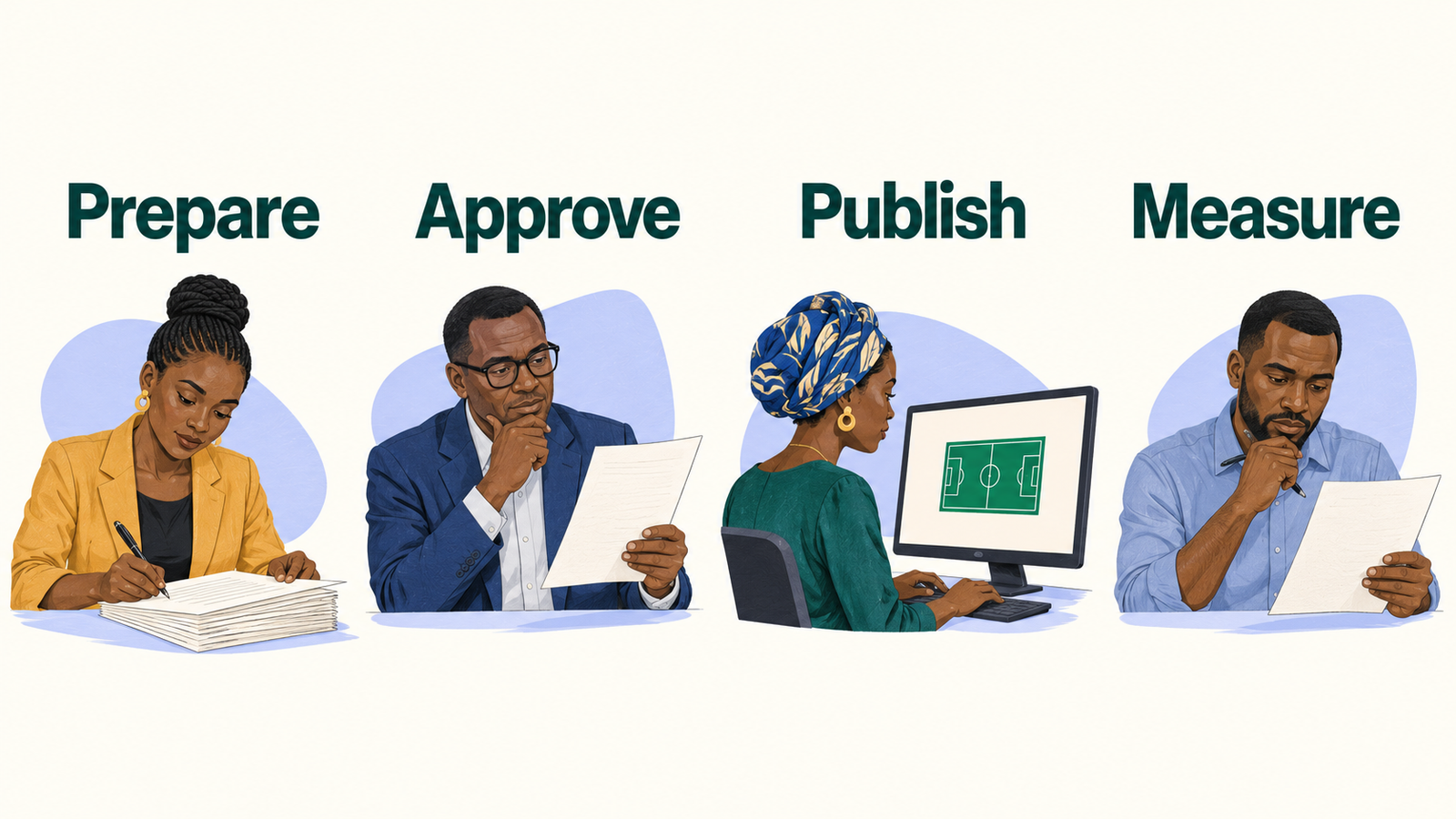
Use a short responsibility map before you confirm the start date. The example below illustrates a possible arrangement; your signed scope must establish the actual owners.
| Workstream | Possible iGW responsibility | Your team or external dependency |
|---|---|---|
| Product facts | Translate confirmed facts into clear explanations | Product/supplier owner confirms availability and evidence |
| Content production | Prepare the agreed copy and visual outputs | Brand owner supplies approved assets and guidance |
| Approval | Resolve consolidated feedback within scope | Named approver signs off product, offer and compliance claims |
| Publication | Supply final assets; publish only if expressly included | Authorised publisher owns scheduling and access |
| Reporting | Review agreed evidence and recommend changes | Analytics owner supplies verified data and definitions |
Assign roles to named people. Your marketing lead might coordinate feedback, while a product owner checks functionality and a compliance reviewer approves regulated claims. A single editorial contact should consolidate those comments, so your writer receives one actionable response.
A Local Launch Depends on Confirmations Outside the Content Team
Imagine you’re preparing to launch a supplier product in Nigeria. You’ve asked iGW to create the product explanation and campaign copy, but some key details are still outstanding. The supplier hasn’t confirmed which features are supported in your integration, the product team still needs to check the destination page, and the final offer wording is waiting for approval.
A content partner can help identify gaps, ask the right questions, and develop content based on confirmed information. What they can’t do is approve product features or promote something that hasn’t been signed off.
It’s also important to separate content production from activation costs. Advertising spend, venue hire, and partner fees need separate approval process. A potential partnership is not the same as a confirmed agreement, so avoid building campaign plans around unsecured budgets, approvals, or introductions.
Recurring Content Needs an Agreed Response When Information Arrives Late
Now imagine you’re running a football content project in Ghana. Your content partner creates the agreed articles and social posts. Your team provides the approved brand guidelines and promotional terms, and feedback is gathered through a single approver.
Our guide to matchday content scope explains how a defined desk can support your existing team.
Agree upfront what happens if the offer changes, a fixture is rescheduled, or feedback doesn’t arrive on time. You might update the content, hold it back, or publish an evergreen piece that’s already approved. Silence should never be treated as approval to publish.
Publishing and community management should also be clearly assigned. If your team is publishing the content, they will receive the approved assets, channel instructions, and the correct version details.

Your Review Should Measure the Commissioned Work
Separate the quality of the work from the results it produces. You can check whether the agreed assets were delivered, based on accurate information, and approved through the right process. Understanding what happened after publication requires website and channel data.
Your publisher should supply the live URLs and publication dates. Whoever owns analytics should provide the agreed reporting window and definitions. Impressions, document clicks, and website visits describe different actions, but an enquiry needs a verified contact or conversation.
If results fall short, look at the stage where the problem occurred instead of placing all the responsibility on the writer. The content, destination page, and product are part of the same experience, but they’re managed by different teams.
Your Start Date Should Follow a Clear Agreement on Inputs and Authority
Before work starts, agree on the deliverables, who provides the inputs, and who signs everything off. Be clear about what’s not included, how many revision rounds are available, and whether any external costs sit outside the scope.
At iGW, our scope defines the local messaging or recurring content work we’re responsible for in collaboration with your existing team. On the other hand, your business owns the product decisions and approvals assigned to it.
Planning a local launch or recurring content engagement? Share your market, next activity, and the work you need covered, so we can discuss a defined scope.